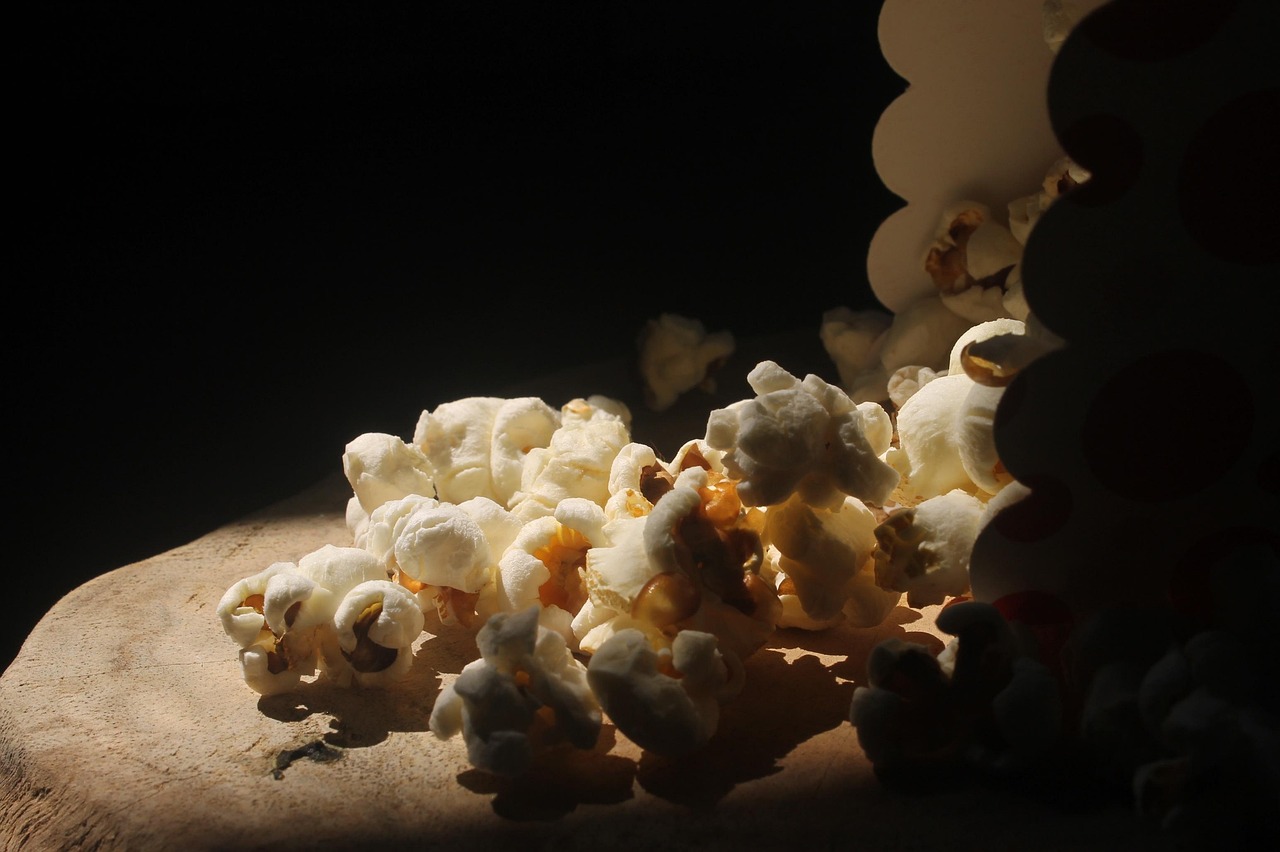
I was maybe ten or eleven years old. A group of us from school had piled into the local cinema to see The Iron Giant. I don't remember exactly how many of us there were but certainly enough to fill a row. Enough that the whole thing felt like an event. We had popcorn. We had all sorts of sweets and fizzy drinks. And then when the film ended, nobody was in a hurry to go home. The afternoon was still ours. Nobody had anywhere else to be.
That feeling... the easy, unscheduled weight of an afternoon with nowhere to be is something I've been trying to name for a long time. I didn't have a word for it back then. I do now and I miss it so much.
The Idea We Lost Before We Knew We Had It
In 1989, a sociologist named Ray Oldenburg published a book called The Great Good Place. In it, he described something so blindingly obvious it had never needed a name before: the third place.
Your first place is your home. Your second place is where you go to work. The third place is everywhere else outside those, the pub, the café, the library, the park bench, indeed anywhere shared and open to the public. Oldenburg described these spaces as the social backbone of community life: neutral ground where no one is required to host, where social hierarchies flatten out, where the price of entry is low enough that it doesn't matter who you are or what you earn. Spaces defined not by transaction but by presence.
The characteristics he listed read almost like a checklist for somewhere that no longer exists nowadays:
Accessible and affordable. Welcoming to regulars and newcomers alike. Conversation as the primary activity. No pressure to perform, consume, or produce. A home away from home.
It's a simple idea. It's also, increasingly, a description of somewhere that's become harder and harder to find in the modern age.
What Happened
I grew up on a farm in rural Ireland. Third places, in the way Oldenburg described them, weren't really part of my day to day life. The nearest town was a drive away and that's if you could convince someone to bring you. You didn't just wander in somewhere. Access to that kind of casual, low-stakes social space was something that happened on rare occasions like trips out, birthdays, anything special enough to remember.
As a kid I do remember McDonald's quite differently to how it exists now. This will sound strange to anyone who's been in one recently, but there was genuine warmth to it. There was colour everywhere instead of greys, browns and questionable wallpaper. It had booths that invited you to stay and were actually comfortable. It was a place where a group of kids could turn up, buy a happy meal and not feel like they were on the clock. Nobody was moving you on or forcing you to east and run. The afternoon was truly yours.
Coffee shops had the same quality. You could nurse a drink for an hour. Two hours. You weren't taking up space, you were using the space, which is what it was there for. There was something quietly radical about a place that let you just be in it and I miss that.
The cinema trip to see The Iron Giant cost so little for a group of us. Popcorn included. The whole thing was casually affordable in a way that made it spontaneous. You didn't need to plan it weeks in advance, budget for it, or strategise about how much the concessions cost. The only choices were what to pick or see.
None of that is quite true anymore.
The Design of Departure
McDonald's didn't accidentally become somewhere you don't want to linger. That was a decision. The warm colours gave way to hard angles and hostile, muted tones. The booths got less comfortable, the lighting harsh and the happy meal toys ironically cheap and depressing. The message embedded in the design shifted from stay a while to eat and get out. Throughput became the point. Chain coffee shops followed the same logic. Seating reduced. The loyalty app thinly disguised as marketing. Corporate script and upsell replacing the conversation at the counter.
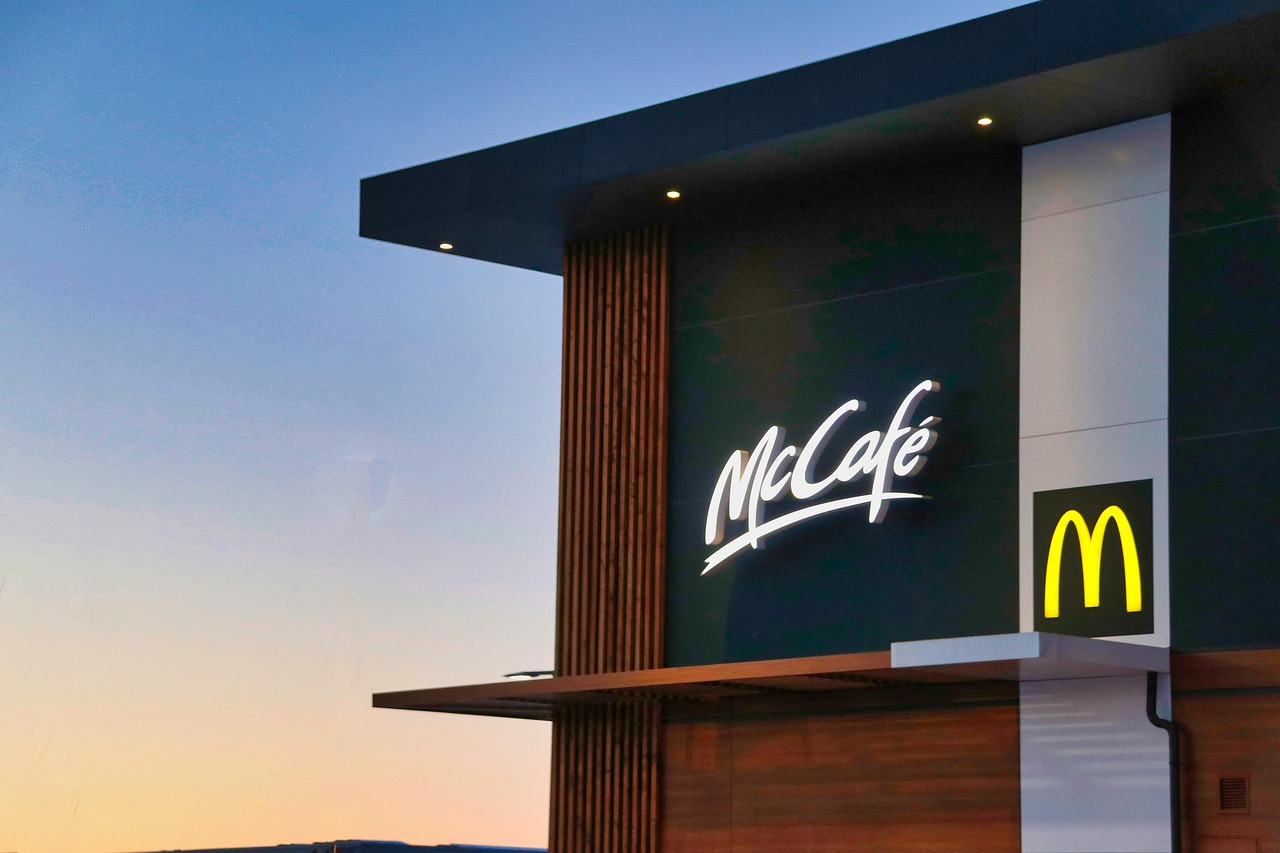
The sociologist Marc Augé had a term for spaces like this: non-places. Not somewhere you belong, but somewhere you pass through. Spaces where you're not a person you're a customer, a transaction, a warm body to be served and pushed out to make room for the next.
Locally-owned places that hadn't yet made this calculation like the independent cafés, the small music venues, the corner shops where you'd stand talking for twenty minutes, have been gutted by the cost-of-living crisis, by rising rents or by the pandemic. Many didn't come back. What replaced them (assuming anything replaced them at all) came pre-optimised for efficiency.
And then there's the simple, brutal arithmetic of it. Going to the cinema as an adult now is a financial decision. You book online in advance to save money. You consider which screen, which seat tier, which day of the week is cheapest. You strategise about spending on snacks or whether to sneak something in because the concessions prices are genuinely insulting. What was once spontaneous is now planned. What was once cheap is now a commitment.
As an adult right now, the places I can go without spending money are: a park, a library, and until recently, a local forest walk, which now has an entry fee. No wonder people chose to stay at home. The commons are quietly being enclosed.
The False Promise of the Digital Third Place
When physical third places started disappearing, the internet was supposed to fill the gap. And for a while, in its early strange years, it came close. Forums had regulars. Message boards had in-jokes and lore. There was something that functioned like a local hub, a place you'd show up to, find familiar faces, and say whatever was on your mind without it mattering too much.
Then it got monetised.
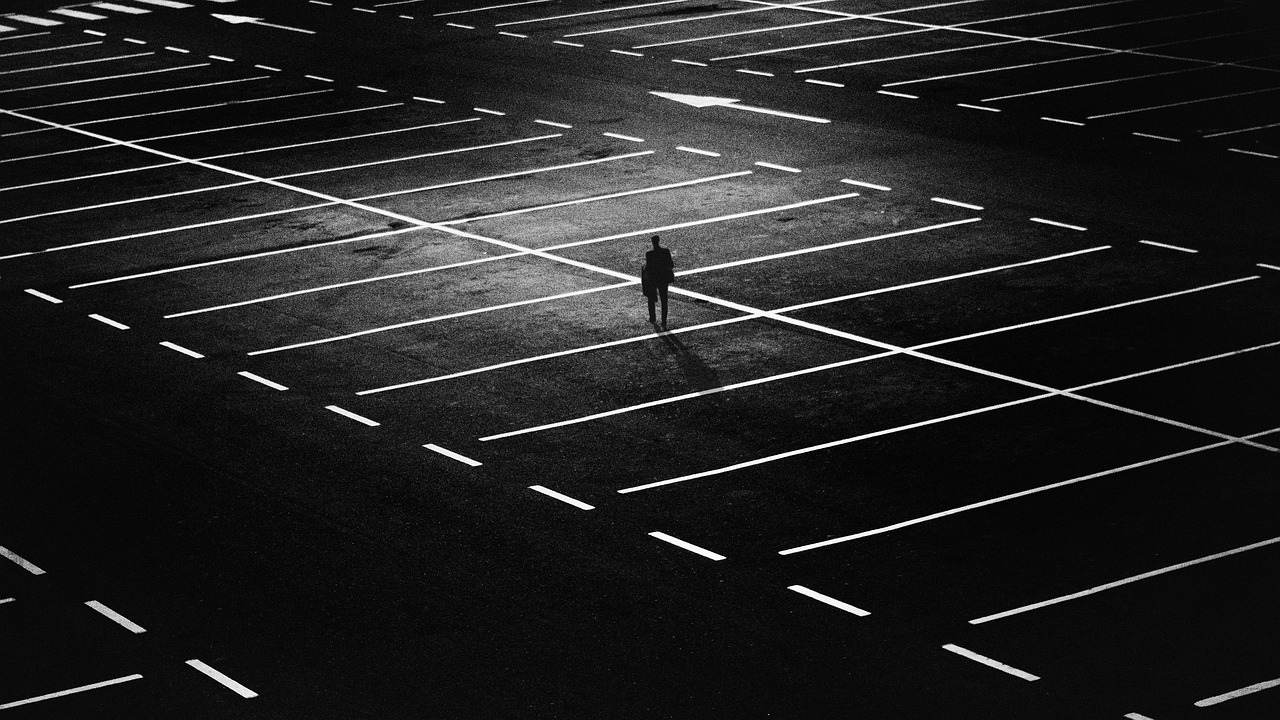
Social media is the non-place version of the third place. It has the surface features like you can talk to people, you can be seen, you can build something like a community, but the structural incentives are all horribly wrong. You are not a person in these spaces. You are a metric. Your attention is the product. The algorithm doesn't care whether you leave feeling connected; it cares whether you stay long enough to see another ad.
The result is what researchers describe as a paradox: we are more connected than at any point in human history, and yet lonelier than ever. Social media provides just enough of a simulation of connection to take the edge off of loneliness, but not enough to actually satisfy or cure it. It stops people seeking out real interaction without replacing what real genuine interaction gives people.
Even in the physical spaces that remain, technology has colonised the atmosphere. Whenever you go to a café, half the room is on their phones. The presence of other people is there sure, but the openness that takes us from stranger to conversation is gone. The space is occupied without being inhabited. Our digital isolation and doom scrolling anxiety have made us truly afraid of one another or how me might be perceived and that's profoundly sad.
An Accidental Third Place
Here's something I didn't expect though. I eventually found my third place. It's just not where anyone would have looked for it.
VRChat is, on the surface, a deeply strange proposition. It's a virtual reality social platform where people inhabit custom avatars and meet in user-created worlds, some painstakingly detailed, some gloriously absurd and weird. It has cafés. It has bars. It has parks, rooftops, forest clearings, beach hangouts, art galleries, and spaces that have no real world equivalent at all. People go there not to work but to simply be around each other.
Let's run Oldenburg's checklist against it:
Neutral ground? Yes, profoundly so. Social hierarchies don't disappear entirely, but your job, your postcode, your physical appearance carry no weight in the virtual world.
Accessible? This is where honesty is required: no, not fully. The hardware barrier is real. A VR headset is a significant expense but you can in join on any recent gaming PC or iPhone/iPad. The barrier to entry is a lot cheaper than it used to be, but it's not free, and that matters.
Regulars? Absolutely. The same faces appear across nights and weeks depending on the worlds you take part in. Even more so when you join social groups.
Conversation as the primary activity? I mean that's the main focus of the whole platform. There is nothing to consume beyond the passing in world gimmick or tip jar and no algorithm surfacing content at you. You show up, you talk, you exist in a space together. Of course there's a push to VRC+ and the ever expanding marketplace but the community pushes back hard to keep those in check.
Urban designers who study third places talk about the importance of comfort, flexibility, and the sense that the space wants you there. VRChat communities have built that, world by world, entirely from scratch. People have reconstructed the things that the physical world stopped offering them like the late-night café that never closes, the place to go when you don't feel like being alone, the corner of the Internet that still feels like it belongs to its inhabitants rather than to its investors.
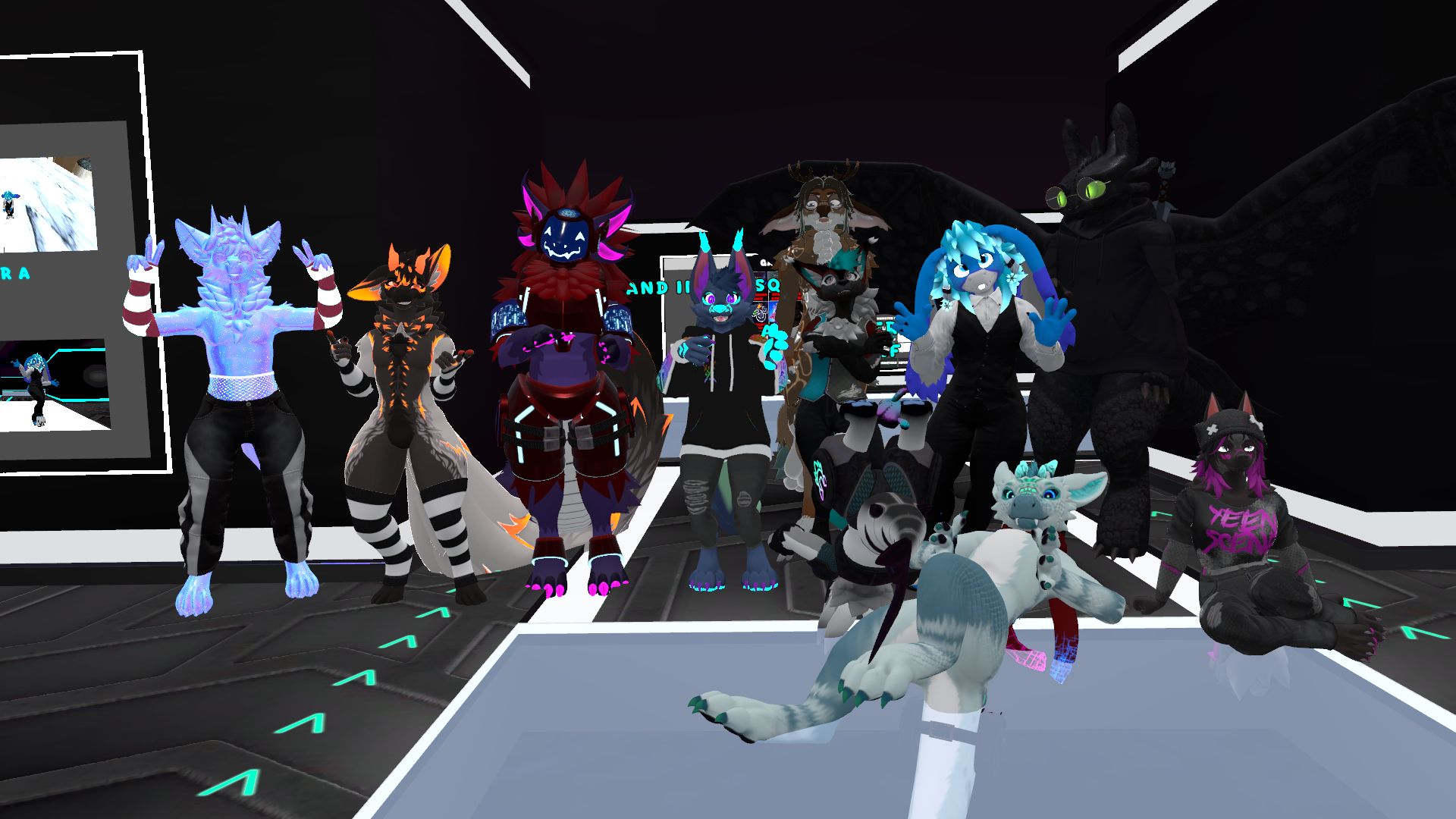
It isn't a perfect answer though. The hardware cost is a real barrier for some and of course the virtual spaces only exist because a company maintains the infrastructure. VRChat could change its mind and model tomorrow but creators would move elsewhere. These are not small caveats.
But here's what I keep coming back to: the fact that people bothered to build these things at all. That the hunger for a third place was strong enough that people reconstructed it in a virtual space, hand-crafted and community-maintained. It tells you something important about what was lost. You don't rebuild something you didn't need.
What the Afternoon Was For
The Iron Giant came out in 1999. It completely bombed at the box office as it happens due to bad marketing. But I do remember that afternoon. I remember the easy weight of it. We were a small group of kids with nowhere to be and a whole afternoon ahead of us, in a place that wasn't asking anything except the price of a ticket.
That's what a third place is. Not a venue, not a destination, not an experience to be optimised. Just somewhere to be. Somewhere that holds you without demanding anything in return.
We built cities and economies that slowly decided that wasn't worth the floor space. That every square metre should justify itself in revenue. That comfort and lingering and unhurried time were inefficiencies to be engineered out and damn did they put effort into it!
The good news (and there is some) is that the need didn't go away just because spaces became commercialised. People are still building third places wherever they can find room for them. In community gardens and independent bookshops and local running clubs and, yes, in virtual worlds that exist inside computers. The instinct is stubborn. It keeps reasserting itself.
Maybe that's the thing to hold onto. Not that we lost something and it's gone, but that the impulse to make these places... the human need for somewhere to simply be together has survived everything thrown at it so far. It keeps finding new rooms to inhabit.
The afternoon isn't over yet.